Articles tagged with ‘Mnemonics’
-
Skritter review: Boosting your Chinese character learning
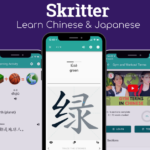
Skritter is a modern tool for learning ancient characters. It combines research-based methods such as active recall and spaced repetition with great Chinese-specific tools and content. While it’s not a free resource, it has enough edges over more generic, free services to be worth it in my opinion.
Read → -
The building blocks of Chinese, part 4: Learning and remembering compound characters
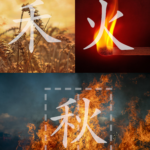
The key to learning Chinese compound characters is to learn the building blocks and how they fit together, including both the function of each component and the structure of the compound. Add some clever memory techniques and you’ll be able to dramatically increase the speed and efficiency of your learning!
Read → -
The building blocks of Chinese, part 3: Compound characters
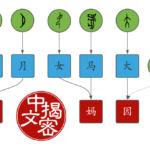
A vast majority of Chinese characters are compounds, and understanding how the components fit together and which function they have, will make learning and remembering characters a lot easier. This article explains the most important types of compounds you’ll encounter and how you can use that knowledge to learn characters more easily.
Read → -
Are mnemonics too slow for Chinese learners?

Mnemonics are very effective for certain types of learning, but how effective are they for learning Chinese? This article is the first of two that looks at the effectiveness of mnemonics, focusing on the question of speed. Are mnemonics too slow to be really useful in the context of using a foreign language?
Read → -
5 levels of understanding Chinese characters: Superficial forms to deep structure
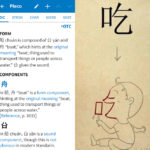
How much do you need to care about the actual composition and meaning of a Chinese character when learning it? In general, better understanding means it’s easier to learn, but is there a limit to how closely you should stick to actual etymology? This article explores the spectrum from using superficial images to real etymology from the perspective of a language learner.
Read → -
Chinese characters that share the same components but are still different
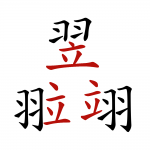
Some Chinese characters consist of the same components in different places, creating completely different characters. This article discusses this phenomenon and its implications for language learners.
Read → -
Don’t use mnemonics for everything

Mnemonics are really cool, but you shouldn’t overuse them. Chinese characters are very complex and the amount of information you might want to remember about them is large. Creating mnemonics for everything is very time consuming and difficult. Instead of doing this, create mnemonics only for things you actually find hard to remember.
Read → -
How to create mnemonics for general or abstract character components

Anyone who has tried mnemonics for learning Chinese characters knows that some components are easier to link together than others. This article discusses in detail how to deal with abstract or general character components and how to handle components with the same or overlapping meaning, an essential skill if you’re serious about character learning.
Read → -
Sensible character learning: Progress, reminders and reflections
The sensible character challenge has now been running for two weeks and it’s time to see how things have been going so far. This post is a progress report that contains some reflections on the challenge itself, as well as some practical advice on how to solve common problems. It also invites participants to share their experience and progress so far.
Read → -
Remembering is a skill you can learn

Contrary to what many people believe, a good memory can be trained. Memory champions are just ordinary people who have practised a lot. There are many clever techniques and tricks you can use to remember things (such as Chinese characters or words) very efficiently. This article is meant to be an introduction for those of you who are new to the fascinating world of memory training.
Read →