Articles in the ‘Reading’ category
-
Chinese character variants and font differences for language learners
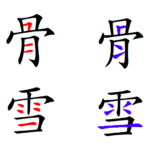
Small details sometimes matter when writing Chinese characters, but sometimes they don’t. Figuring out which details to pay attention to is made even harder by character variants and font differences!
Read → -
Student Q&A, July 2024: Reading speed, children’s books and Chinese literature

How can you read Chinese faster? Which children’s books are best for second-language learners? And what’s the ideal entry point into Chinese literature?
Read → -
Chinese reading challenge, July 2024

It’s time for a Chinese reading challenge! It starts on July 10th, so enrol, set your goal and read as much as you can before the end of the month. This article contains more information about the challenge, as well as some advice about improving reading ability in Chinese.
Read → -
Chinese character learning for all students

Learning to write Chinese characters by hand takes a lot of time. In today’s digital era, is it necessary to learn handwriting? Let’s explore the advantages and disadvantages for second-language learners and discuss what an effective curriculum that caters to all students might look like!
Read → -
Interview: Insights from Skritter’s Complete Guide to Learning Chinese

If I wrote a comprehensive guide to learning Chinese with a special focus on vocabulary, what would it look like? Now you can find out – for free!
Read → -
Real communication: What it is, why you want it and how to get it

A language is a structured system used for communication, so the idea to focus on communication when learning Chinese sounds obvious, but it’s surprisingly new and rarer than you think!
Read → -
Student Q&A, March 2024: Reading aloud, finding word boundaries, and working actively with reading materials

How can you improve your ability to read aloud in Chinese? How can you learn to see where a word starts and ends in a text? And how can you make sure you get the most out of your reading practice?
Read → -
Outlier Chinese Character Masterclass review: Understand more, learn faster, remember longer

Mastering Chinese characters, whether you find them enchantingly beautiful or overwhelmingly complex, is essential for literacy in Chinese. Outlier Linguistics will help you understand how the Chinese writing system works, making it easier to learn!
Read → -
8 great ways to scaffold your Chinese listening and reading

Listening and reading in Chinese can be a challenge, especially when your level is not high enough. To understand more and thereby also learn more, use scaffolding!
Read → -
12 ways chatting online will improve your Chinese

Chatting is an excellent way of learning a language. Some people think chatting online is a waste of time, but in this article I list and explain a dozen reasons why this is wrong. In fact, chatting offer many advantages that are very hard to find elsewhere.
Read →