
Situation: You have just started learning Chinese or plan to do so soon. You’re still getting acquainted with characters, tones and other peculiarities of the Chinese language. You want guidance and help regarding the basics.
Goal: To be able to understand spoken phrases, high-frequency words and short, simple texts related to areas of immediate personal relevance, such as family, shopping or work. To be able to use simple sentences to communicate about family, living conditions, education and work in familiar situations.
Range: From zero beginner to elementary level. CEFR A0-A2. ACTFL up to Intermediate Mid. Self-evaluate your Chinese ability here.
Back-to-school course discount: Until the end of the month (midnight, August 31st, pacific time), get $10 off Unlocking Chinese: The Ultimate Course for Beginners. Simply use the promo code “kai1xue2” at checkout!
Tune in to the Hacking Chinese Podcast to listen to the related episode:
Available on Apple Podcasts, Google Podcast, Overcast, Spotify, YouTube and many other platforms!
I have taught many introduction courses in Chinese, but I still remember what it was like to set out on this incredible journey myself in 2007. Since then, I’ve spent a great deal of time and effort to figure out how to best help beginners get off to a good start.
Chinese beginner: The most popular articles
If you want to know what everybody else finds useful, start with these articles:
50 beginner questions about learning Chinese
Below, I will answer the most common questions beginners have about learning Chinese. For each question, I provide a short and direct answer whenever possible, as well as links to further information.
For each question, I provide a short and direct answer whenever possible, as well as links to further information. Click on the question to see the answer. You can expand all questions (great if you want to search among all answers) and you can also collapse all questions. You can also expand each category below by clicking on it.
If you have a question not already covered here, you’re welcome to leave a comment and I will consider including it here!
1. Questions about learning Chinese as an adult
- Am I too old to learn Chinese?
No, but you might be too busy or too lazy. While some things become harder with age, this is not something you can influence, so it’s more productive to focus on things you have a say about.
Three factors determine how much you learn: Content, time and method. Optimise those, and you’ll be able to learn Chinese, regardless of how old you are.
- How hard is it to learn Chinese?
Chinese is hard to learn, but not as hard as some say. Learning the language is hard in the sense that walking a thousand miles is hard, not in the sense that mountain climbing is hard. Invest the time and energy, and you will reach your goals!
Some things are also easier than in other languages, especially as a beginner!
- How long do I have to study Chinese before it becomes useful?
It can be incredibly useful to learn just a little bit of Chinese, so I would say it’s useful from day one! Of course, the more you learn, the more useful it becomes. You can reach a level where you can have conversations about everyday topics in five hundred hours or so. If you study five hours a week, that will take you two years,
but if you study full time, you can easily achieve that in just a few months.
- There are so many things to learn; what should I focus on first?
- I’m busy with other things! How can I find the time to learn?
Spread learning out over the day and across other activities. Learning is not only done in class or in front of a desk. You can combine learning Chinese with most other activities
as long as you analyse the problem from the right angle.
- I have questions you haven’t answered here; what should I do?
You can check out my
101 questions and answers about how to learn Chinese, which only partially overlaps with the questions here. You can also ask me directly
by contacting me or
saying hi on Twitter. If you have questions about the Chinese language itself,
you’re better off checking one of these websites.
- Do you have some more structured guidance for beginners?
I have created a video course specifically for beginners. It takes you through the basics of the language, including pronunciation and characters, but also how to learn Chinese in the best way possible. Learn more here:
Unlocking Chinese: The ultimate course for beginners.
2. Courses, textbooks, teachers and guidance
- Is it a good idea to enrol in a Chinese course?
A course provides you with structure, content and guidance, which are rather handy when you start out.
Enrolling in a course is often a good idea, but you can definitely learn on your own as well. If you want to make sure you aren’t missing anything crucial, check out my course
Unlocking Chinese: The ultimate course for beginners.
- Which course should I enrol in? Which school should I choose?
These questions are impossible to answer because it depends on so many factors.
I’ve discussed how to decide which course to take in more detail here, though.
- Are there any important things that my course won’t cover?
Well, that depends on the course,
but in general, you can not rely on your course to provide you with everything you need. Teachers usually don’t talk much about how to learn,
spend too much time on explaining things in English and don’t make you listen and read anywhere near as much as you should. Also, you’re the one learning the language,
so you should be in charge, even if you’re enrolled in a course.
- Do I have to go abroad to learn Chinese, or can I do it from home?
You can learn Chinese from home, but immersion helps. At home, you need to actively find learning opportunities, which takes time and discipline. You learn from engaging with the language,
so you won’t learn Chinese simply by living abroad either.
- I have time, but no money. Can I learn Chinese using only free resources?
Yes, you can! There are tons of free learning materials online, and I have catalogued most of the good ones here. I also suggest free resources below for each category of questions.
Still, some resources really are worth paying for.
- How can I make sure I practise the right things?
Use Paul Nation’s four strands to categorise your learning activities. The emphasis is on meaning-focused input and output, which means conveying or understanding meaning rather than drilling characters, words or grammar.
- What are the most popular textbooks?
There are many textbooks out there, but
Integrated Chinese and
New Practical Chinese Reader are very popular (choose between simplified and traditional versions;
click here if you don’t know the difference). If you want to focus on Taiwan, check out
A Course in Contemporary Chinese. Links go to Amazon.
- What other resources are there for learning Chinese?
3. Speaking, listening and conversing
- What should I focus on to get the best results as a beginner?
You should focus on listening as much as possible. Your speaking ability is the tip of the iceberg, built on a much larger amount of listening.
You need lots of comprehensible input to build up your mental model of what Mandarin sounds like.
- I’m not comfortable practising Chinese with real people; what should I do?
As mentioned above, focus on listening instead. It might not feel like you’re learning as much, but you are, and that will result in speaking ability with some practice later.
Here are some suggestions for how to learn Chinese as an introverted student. One suggestion is to
use voice messaging as a stepping stone to real conversations.
- Will doing drills help me speak Chinese?
A bit,
but try to focus on conveying and receiving information when speaking and listening. When you focus on communication, you learn much more than if you drill grammar patterns.
- How much time should I spend on theory, such as grammar and pronunciation?
As an adult, it can help to understand some basic theory,
but this should be combined with much more time engaging with the language in communicative activities. When it comes to pronunciation specifically, make sure you get feedback, as it can be hard to identify your own errors.
- How can I get feedback on my spoken Chinese?
- What’s the best environment to practise speaking?
We’re all different, but having a patient conversation partner who is good at communicating on your level without resorting to English all the time and without making you feel uncomfortable is probably the best. This could be
a friend or significant other,
a language exchange partner or
a hired professional. Your mileage may vary.
- I can’t afford a tutor, what should I do?
Find Chinese-speaking people where you live and see if they are interested in speaking with you. If you’re in China, this is much easier, of course, but universities across the world typically have lots of exchange students.
A language exchange might work.
You can also try talking to yourself, which is actually quite useful!
- What resources do you recommend for improving listening and speaking?
The best free reading resources for all levels are collected
here. For speaking, I recommend
Audacity for mimicking and
HiNative or
HelloTalk for finding people to talk to. If you want a tutor, you can always check
iTalki. See more resources for
listening or
speaking by clicking these links.
4. Mandarin tones and pronunciation
- How should I learn pronunciation as a beginner?
By listening, mimicking and getting feedback. You will also
benefit from learning a bit of theory about pronunciation because it’s highly unlikely that you’ll be able to even hear the correct sounds and tones. You should also learn
Pinyin (or another transcription system) thoroughly and
never guess a syllable is pronounced based on how it’s spelt.
- Do you have any tips for how to learn Pinyin?
Base your learning on listening and mimicking rather than reading Pinyin.
Think of Pinyin as a set of initials and finals, not individual letters. Make sure you know about spelling rules and exceptions,
especially these common traps and pitfalls.
- What are tones? Do I have to learn them?
Tones are changes in pitch that are used to create different words, similar to how long and short vowels in English can create different words. Compare “peek” and “pick”.
So yes, you have to learn tones, and not doing so makes as much sense as not learning vowel length in English. Tones are different from intonation, which does not create different words. In English, questions usually have a rising pitch, “tea?” whereas statements have a falling pitch, “tea!”. It’s the same word in both cases, though, but in Chinese, this difference in pitch creates a different word.
I have collected advice for learning tones here.
- How should I learn tones?
The same way you learn pronunciation in general: listening and mimicking.
I have collected advice for learning tones here. Tones can be tricky because many students don’t even hear the difference between them.
You can learn that by varied exposure over time and by paying attention to the right cues. If you struggle with basic tones,
you can check out my (free) course here.
- I can pronounce tones individually but struggle with words. What should I do?
You should stop focusing on individual tones and spend all your time with tone pairs instead. There are only 20 unique pairs and these cover a large majority of words. Learn one of each extremely well and use that to pronounce all other words with the same combination!
- I can’t afford your pronunciation course or a tutor; are there any free alternatives?
I already suggested some above,
but mimicking on your own can take you very far as well. As usual, you can’t do too much listening, so make sure you do that as much as possible!
- What resources do you recommend for improving tones and pronunciation?
5. Reading, writing and communicating in text
- Should I learn characters from day one?
Not unless you really want to or it’s required of you. Focus on the spoken language first, as delaying characters makes learning them easier, whereas things like tones become harder to learn the longer you wait.
- I want to learn characters, but should I learn to write them by hand?
It’s good to learn how to write the most common characters by hand, but beyond that, you can skip handwriting if you don’t enjoy it. Reading and typing are enough. If you insist on learning to write everything by hand, progress in other areas will be agonisingly slow.
- I want/need to write by hand, but my handwriting is ugly. How can I improve?
You should focus on writing clear and easy-to-read characters. They don’t have to look good! Many teachers are way too picky when it comes to handwriting (
among other things), but
you can check out my advice for how to improve handwriting here.
- How do I look up a character I don’t know?
There are many ways of doing this, depending on what you do know. The easiest way is to use an electronic dictionary, such as
Pleco or
Hanping, and then use on-screen handwriting, your phone’s camera, Pinyin or even English. You can also use a paper dictionary, but I strongly advise against that!
- How do I type Chinese? Which is the best method?
The most common method is to type pronunciation, usually Pinyin, and the computer will then select the right characters for you. You can install support for Chinese on your computer or phone, which will give you access to such an input method.
This site is great if you need help getting Chinese working on your system.
I have discussed that and many other input methods and what benefits they bring for learners here.
- What should I read as a beginner? Is my textbook enough?
No, your textbook is far from enough. It contains very little text, and the difficulty ramps up quickly.
Use more than one textbook. You should try to read and understand as much text as possible, not just spend a lot of time.
This means you should read text adjusted to your level. You can find many recommendations
here (a list of resources) and
here (broader scope).
- Should I read on paper or digitally?
You should read digitally as much as possible. This makes sure that you can use the full potential of modern tools, which will allow you to spend your time reading rather than desperately flipping through a dictionary. Pop-up dictionaries are great!
- People say my sentences are like English with Chinese words; what should I do?
If you’re translating,
make sure you’re not translating directly on a word-by-word level. That never works. If you’re looking up words,
you need to spend some extra time checking how the words are used, as you can’t guess this based on English. Beyond that, you should read more, which will help you build a mental model of what Chinese sentences should be like.
- I find writing in Chinese very hard, do you have any further advice?
- What resources do you recommend for improving reading and writing?
The best free reading resources for all levels are collected
here, but if you’re willing to pay, I have listed many more types of resources
here. For more resources for
reading and
writing, click each link respectively.
6. Chinese characters, words and grammar
- Does Chinese have an alphabet? How do characters work?
There are ways to write Mandarin using our letters, with Pinyin, for example, but Chinese characters don’t make up an alphabet. Instead, characters started out as pictures but have evolved into a complex writing system over thousands of years. Most characters contain smaller components that are included to indicate meaning or pronunciation.
I have described this in detail in a series of articles here, and you might also be interested in
Skritter’s character course.
- I have a bunch of characters I should learn. How do I go about it?
Learning characters is different from learning words in other foreign languages. I have discussed
8 principles for learning your first Chinese characters here.
- Chinese characters are confusing! Do you have a more comprehensive guide?
Yes, I do, and I have collected it all in one place here:
My best advice on how to learn Chinese characters.
- Should I learn all the components in all characters?
No, learning everything at once is overwhelming. If you see a component appear in different contexts, though, you should learn it separately! If a character refuses to stick, see if looking up the components helps (I suggest using the
Outlier Linguistics Dictionary of Chinese Characters for this). If you want a list of really useful components, check this out:
Kickstart your Chinese character learning with the 100 most common radicals.
- I find Chinese characters really hard to remember; what should I do?
- Do I need to learn the stroke names?
- Do I need to learn stroke order?
Yes. Inventing your own stroke order will lead to problems further down the road.
Here are all the resources you need to learn stroke order!
- Should I learn simplified or traditional Chinese? What’s the difference anyway?
You should probably learn simplified unless you are studying in Taiwan or plan to do so. In most other places, simplified characters dominate. These characters were standardised to improve literacy and contain fewer strokes,
but they aren’t necessarily easier to learn. I advise against learning both simultaneously
since learning the other set becomes easier the more Chinese you know.
- The characters on my phone/computer look different from those in my textbook, what's wrong?
Characters are written in a range of different styles. The one in your textbook has varied stroke thickness, making it look more like brushstrokes, but most computer fonts don’t have that. It could also be that you don’t have the right fonts installed. This is a much trickier subject than you might think, so I’ve written
a guide to Chinese fonts for language learners.
- What resources do you recommend for learning Chinese characters, words and grammar?
First, make sure you have a good electronic dictionary (
Pleco or
Hanping). Second, find a program for long-term learning and reviewing
Skritter (best for characters),
Pleco (combined dictionary) or
Anki (for the tinkerer. Third, get
the Outlier Linguistics Dictionary of Chinese Characters. Fourth, check
the Chinese Grammar Wiki for anything related to grammar.
I hope you found this Q&A useful! If you want to receive weekly updates from me with tips and tricks for learning Chinese, please sign up for the newsletter below. It also contains a crash course in how to learn Mandarin, with a broader scope than the questions above. Good luck with your studies!
All articles in this category
Here’s a list of all articles tagged as “beginner”:
- Chengyu, a magic key to Chinese language and culture, or a waste of time?
- Interview: Insights from Skritter’s Complete Guide to Learning Chinese
- Chinese speaking challenge, April 2024
- Student Q&A, April 2024: Learning chengyu, listening to yourself and using role-playing games to learn Chinese
- Is speaking more important than listening when learning Chinese?
- The best podcasts for learning Chinese in 2024
- Real communication: What it is, why you want it and how to get it
- How to learn Chinese in the long term with intrinsic motivation
- Chinese reading challenge, March 2024
- Student Q&A, March 2024: Reading aloud, finding word boundaries, and working actively with reading materials
- Outlier Chinese Character Masterclass review: Understand more, learn faster, remember longer
- Hacking Chinese Pronunciation: Speaking with Confidence is now open!
- The Hacking Chinese guide to Mandarin tones
- Chinese writing challenge, February 2024
- Student Q&A, February 2024: Typing or handwriting, using new words in texts, and how to use AI to improve your writing
- Listen more and learn more by building a personal Chinese audio library
- 8 great ways to scaffold your Chinese listening and reading
- Chinese listening challenge, January 2024
- Student Q&A, January 2024: Chinese music, too much Mandarin in the classroom, and listening in noisy environments
- 12 ways chatting online will improve your Chinese
- How to best use flashcards to learn Chinese
- Why flashcards are terrible for learning Chinese
- Chinese vocabulary challenge, December 2023
- Student Q&A, December 2023: How many words to learn, if it’s good to learn radicals, and whether to learn simplified or traditional characters
- Why flashcards are great for learning Chinese
- Black Friday discounts for Hacking Chinese courses
- Is learning things by heart good for improving your Chinese?
- The 10 best free Chinese reading resources for beginner, intermediate and advanced learners
- Student Q&A, November 2023: Reading Pinyin or characters, comprehensible vs. compelling content and reading tools
- Shapeshifting Chinese characters
- You won’t learn Chinese simply by living abroad
- 100 hours of Chinese listening in 3 weeks: What I learnt and how to apply it
- Chinese pronunciation challenge, October 2023
- Student Q&A, October 2023: Expanding vocabulary quickly, learning by watching videos and nailing dictation tests
- Listen more than once: How the replay button can help you learn more Chinese
- The cheapest and most convenient way to improve your spoken Chinese
- Improving your Chinese pronunciation by mimicking native speakers
- Student Q&A, September 2023: Listening more than once, assessing pronunciation and the merits of flashcards
- How long do you have to study Chinese to make it useful?
- Should you throw away your Chinese textbook?
- Chinese translation challenge, August 2023
- Hacking Chinese Podcast three-year anniversary Q&A
- Is Chinese difficult to learn?
- Timeboxing Chinese: Get more done in less time
- Insights from the new HSK 7-9: Interview with Sara Jaaksola
- Why travelling isn’t the best method to learn Chinese
- Skritter review: Boosting your Chinese character learning
- Get to know your Chinese voice to level up your speaking ability
- How learning some basic theory can improve your Mandarin pronunciation
- Learning Chinese is more like walking a thousand miles than running 100-metre dash
- Beyond tīng bu dǒng, part 5: Becoming a better listener as a student of Chinese
- Vocabulary lists that help you learn Chinese and how to use them
- Should you learn Chinese vocabulary from lists?
- 6 benefits of learning Chinese through sports
- Should you use an efficient method for learning Chinese even if you hate it?
- Don’t try to improve everything at once when learning Chinese
- Learn Chinese by playing Mahjong (麻将, májiàng)
- Can ChatGPT pass the HSK?
- Beginner Chinese listening practice: What to listen to and how
- Using the HSK as a roadmap to learning Chinese
- Learn Chinese efficiently, not quickly
- Beyond tīng bu dǒng, part 3: Using what you already know to aid listening comprehension in Chinese
- Standard pronunciation in Chinese and why you want it
- How to study Chinese when you don’t feel like it
- Are there any shortcuts for learning Chinese?
- The 10 best free Chinese listening resources for beginner, intermediate and advanced learners
- Learning the neutral tone in Mandarin
- Beyond tīng bu dǒng, part 2: From sound to meaning in Mandarin
- Beyond tīng bu dǒng, part 1: A guide to Chinese listening comprehension
- Kickstart your learning with the Skritter Character Course
- Take responsibility for your Chinese learning now
- Hacking Chinese Podcast two-year anniversary Q&A
- How to learn Chinese characters as a beginner
- 7 ways to write Mandarin tones
- Chinese language question triage: When to ask whom about what
- How to become fluent in Chinese
- How to learn from your mistakes and errors when learning Chinese
- Do you have to learn to write Chinese characters by hand?
- Why you should use more than one Chinese textbook
- Analyse and balance your Chinese learning with Paul Nation’s four strands
- On accuracy, communication and comprehensibility when learning Chinese
- How to learn Chinese pronunciation as a beginner
- Time quality: Studying the right thing at the right time
- 500 resources for learning and teaching Chinese, tagged by level, topic and type
- How to survive and thrive in a difficult Chinese course
- Is taking a Chinese course that’s too hard good for your learning?
- Best of Hacking Chinese 2021
- A guide to Pinyin traps and pitfalls: Learning Mandarin pronunciation
- How to improve fluency in Chinese by playing word games
- The building blocks of Chinese, part 6: Learning and remembering compound words
- The building blocks of Chinese, part 5: Making sense of Chinese words
- Why spaced repetition software is uniquely well suited to learning Chinese characters
- The best Chinese reading practice for beginners
- 6 challenges students face when learning to read Chinese and how to overcome them
- Should you enrol in a Chinese course or are you better off learning on your own?
- Why your Chinese isn’t as good as you think it ought to be
- The building blocks of Chinese, part 4: Learning and remembering compound characters
- The building blocks of Chinese, part 3: Compound characters
- Using voice messaging as a stepping stone to Chinese conversations
- A smart method to discover problems with Mandarin sounds and tones
- The building blocks of Chinese, part 2: Basic characters, components and radicals
- The building blocks of Chinese, part 1: Chinese characters and words in a nutshell
- Hacking Chinese Podcast one-year anniversary Q&A
- Chinese language logging, part 3: Tools and resources for keeping track of your learning
- Chinese language learning in the twenty-first century: Towards a digital ecosystem? Interview with Julien Leyre
- The new HSK 3.0: What you need to know
- Learning to understand regionally accented Mandarin
- The importance of tones is inversely proportional to the predictability of what you say
- Lost in transcription: Saylaw, Ice Island and Aristotle
- Chinese language logging, part 2: A healthy, balanced diet of Mandarin
- Chinese language logging, part 1: Why and how to track your progress
- What’s the difference between Chinese pronunciation and Pinyin? Does it matter?
- Learning the second tone in Mandarin Chinese
- Chinese input methods: A guide for second language learners
- 6 things in Chinese that are harder to learn than they seem
- My best advice on how to learn Chinese characters
- 20 tips and tricks to improve your Chinese writing ability
- Learning the third tone in Mandarin Chinese
- The most serious mistake students make when learning Mandarin pronunciation
- Best of Hacking Chinese 2020
- How to not fail with your New Year resolution to learn Chinese
- 7 things Chinese students should do during the winter vacation
- 9 answers to questions about Pinyin and pronunciation
- An introduction to extensive reading for Chinese learners
- Review: Learning Chinese by video immersion with FluentU
- Why learning Chinese pronunciation by using English words is a really bad idea
- 7 ideas for smooth and effortless Chinese listening practice
- Should you learn the names of the strokes in Chinese characters?
- How to not teach Chinese characters to beginners: A 12-step approach
- Why not going to China now could actually be good for your Chinese
- The key to unlocking your first semester of Chinese
- Review: The Outlier Dictionary of Chinese Characters
- All the resources you need to learn and teach Chinese stroke order
- Diversify how you study Chinese to learn more
- Improving your Chinese while watching TV shows
- Training your Chinese teacher, part 4: Writing ability
- Should you learn to speak Chinese before you learn Chinese characters?
- How to get honest feedback to boost your Chinese speaking and writing
- Are mnemonics too slow for Chinese learners?
- Learning Chinese words: When quantity beats quality
- When spaced repetition fails, and what to do about it
- Chinese is fascinating and exciting, not weird and stupid
- How to figure out how good your Chinese is
- The simple trick I used to double the amount of Chinese I listen to
- 5 levels of understanding Chinese characters: Superficial forms to deep structure
- The forking path: A human approach to learning Chinese
- Does using colour to represent Mandarin tones make them easier to learn?
- How important is reading speed on tests like HSK and TOCFL?
- How to look up Chinese characters you don’t know
- Can too much guidance make you learn less Chinese?
- Why is listening in Chinese so hard?
- Training your Chinese teacher, part 3: Listening ability
- Two types of pronunciation problems and what to do about them
- New course: Unlocking Chinese – The Ultimate Guide for Beginners
- The nine principles of learning (and the mistakes from failing to follow them)
- Review: Mandarin Companion: Easy to read novels in Chinese
- 101 questions and answers about how to learn Chinese
- The most common Chinese words, characters and components for language learners and teachers
- 7 things you were taught in Chinese class that are actually wrong
- How good is voice recognition for learning Chinese pronunciation?
- Using speech recognition to improve Chinese pronunciation, part 1
- Training your Chinese teacher, part 2: Speaking ability
- The beginner’s guide to Chinese translation
- Tone errors in Mandarin that actually can cause misunderstandings
- Why using a good dictionary can be bad for your Chinese reading ability
- Free and easy audio flashcards for Chinese dictation practice with Anki
- Reading is a lot like spaced repetition, only better
- Training your Chinese teacher, part 1: Introduction
- Review: Language Empowerment: Demystify Chinese culture and fire up your Mandarin + interview with the author
- 36 samples of Chinese handwriting from students and native speakers
- How to improve your Chinese handwriting
- Focusing on Chinese tones without being distracted by Pinyin
- Cramming vs. spaced repetition: When to use which method to learn Chinese
- 8 tips for learning Chinese as an introverted student
- Learning to unicycle, learning anatomy and learning Chinese
- Five text games for Chinese learners
- Should you focus on learning Chinese words or phrases?
- Training and testing your ability to hear Mandarin sounds
- Is it necessary to learn the stroke order of Chinese characters?
- Task-based Chinese learning and teaching
- Learning (or not learning) Chinese slang
- Playing Codenames to learn Chinese and other languages
- Comprehension-based listening vs deep end immersion
- 10 ways of using games to learn and teach Chinese
- A student’s guide to comprehension-based learning
- The benefits of a comprehension-based approach for teaching and learning Chinese
- An introduction to comprehension-based Chinese teaching and learning
- How to fake sounding like a native Chinese speaker
- Spaced repetition is not limited to flashcards
- Looking up how to use words in Chinese the right way
- Why you should preview before every Chinese lesson
- Three factors that decide how much Chinese you learn
- Obligatory and optional tone change rules in Mandarin
- Learn Chinese implicitly through exposure with a seasoning of explicit instruction
- 7 kinds of tone problems and what to do about them
- Learning Chinese by playing board games
- Overcoming the problem of having too many Chinese words to learn
- Learning to read handwritten Chinese
- Transcribing Chinese audio as an active form of listening practice
- Escape: A text adventure game for Chinese learners
- Are you practising Chinese the right way? Is your method valid?
- Don’t forget to consolidate the Chinese you have already studied
- The best Twitter feeds for learning Chinese in 2016
- Why you should start blogging in Chinese today
- How technology can stop you from learning Chinese
- How technology can help you learn Chinese
- Which Chinese language course should you take?
- I have published a book!
- Should you learn the pronunciation of radicals?
- Learning Chinese through comprehensible input
- ChinesePod review: Your companion to Mandarin fluency
- What your Chinese course will not teach you
- Learn Chinese character meaning and pronunciation together
- Listen before you read: Improve your listening ability
- Can you use English learning materials to study Chinese?
- Learning tones in Mandarin is not optional
- The Hacking Chinese free tone training course
- Learning to hear the sounds and tones in Mandarin
- How to verify that you use the right Chinese font
- Chinese character variants and fonts for language learners
- Which words you should learn and where to find them
- Can native speakers be wrong about Chinese grammar and pronunciation?
- Learning Chinese characters through pictures
- Zooming out: The resources you need to put Chinese in context
- Zooming in: The tools you need to break down and understand Chinese
- Chinese learning tools and resources worth paying for
- Why you should read Chinese on your phone
- Learning to pronounce Mandarin with Pinyin, Zhuyin and IPA: Part 2
- Learning to pronounce Mandarin with Pinyin, Zhuyin and IPA: Part 1
- Why you should learn Chinese in Chinese
- Review: Mandarin Companion graded readers (Level 1)
- The best Twitter feeds for learning Chinese in 2015
- Will a Chinese-only rule improve your learning?
- Using Chinese textbooks to improve reading ability
- How to adjust your Chinese listening to the right level
- Three steps to more and better Chinese listening practice
- What you intend to write is more important than the character you actually write
- 24 great resources for improving your Mandarin pronunciation
- How to find a suitable Chinese name
- Focus on initials and finals, not Pinyin spelling
- How knowing your best performance in Chinese can help you improve
- How to find the time and motivation to read more Chinese
- Learning how to ask for and receive directions in Chinese
- Launching Hacking Chinese Challenges
- Learning to write Chinese characters through communication
- Focusing on communication to learn Chinese
- Change your attitude to enjoy life and learn more Chinese
- How long have you studied Chinese? 290 years or 58 992 hours!
- About cheating, spaced repetition and learning Chinese
- Study more Chinese: Time boxing vs. micro goals
- 7 ways of learning to write Chinese characters
- How long have you studied Chinese?
- Focusing on radicals, character components and building blocks
- Improve your pronunciation with the Hacking Chinese pronunciation check
- Language learning with a Chinese girlfriend or boyfriend
- A learner’s guide to TV shows in Chinese, part 2
- Sensible character learning challenge 2014: The Big Finish
- How to reach a decent level of Chinese in 100 days
- How and why to watch the world cup in Chinese
- Launching Hacking Chinese Resources
- A learner’s guide to TV shows in Chinese, part 1
- Sensible character learning challenge 2014: Milestone #3
- How and why to use television to learn Chinese
- How to find out how good your Chinese pronunciation really is
- How to Approach Chinese Grammar
- Sensible character learning challenge 2014: Milestone #2
- Handwriting Chinese characters: The minimum requirements
- Learn to read Chinese… with ease?
- The grand listening cycle: Improve your Chinese listening ability
- Three ways to improve the way you review Chinese characters
- Sensible character learning challenge 2014: Milestone #1
- Why good feedback matters and how to get it
- Sensible Chinese character learning challenge 2014
- Sensible Chinese character learning revisited
- Asking the experts: How to learn Chinese grammar
- Flashcard overflow: About card models and review directions
- Learning how to fish: Or, why it’s essential to know how to learn
- Two reasons why pronunciation matters more than you think
- Habit hacking for language learners
- Focusing on tone pairs to improve your Mandarin pronunciation
- Wuxia, a key to Chinese language and culture
- Chinese reading challenge: Read more or die
- Chinese immersion with Carl Gene Fordham
- Role-playing to learn more Chinese and avoid frustration
- Review: The Geography of Thought: How East Asians and Westerners Think Differently… And Why
- Improving your spoken and written Chinese by focusing on the process
- Asking the experts: How to bridge the gap to real Chinese
- Preparing for rainy days and dealing with slumps
- Your slumps affect your language learning more than your flows
- What’s your next step to master Chinese?
- 5 websites to help answer your questions about Chinese
- Reading aloud in Chinese is really hard
- Phonetic components, part 2: Hacking Chinese characters
- Phonetic components, part 1: The key to 80% of all Chinese characters
- Why manually adding and editing flashcards is good for you
- Why you need goals to learn Chinese efficiently
- Do you really know how to count in Chinese?
- How to get good grades when studying Chinese
- The get-back-up-to-speed summer challenge
- Role-playing as a way to expand your Chinese
- If you think spaced repetition software is a panacea you are wrong
- Learning how to learn Chinese through self-experimentation
- Using Audacity to learn Chinese (speaking and listening)
- You might be too lazy to learn Chinese, but you’re not too old
- Immersion at home or: Why you don’t have to go abroad to learn Chinese
- The question you have to ask about your Chinese teacher or course
- You shouldn’t walk the road to Chinese fluency alone
- 14 extra songs to learn Chinese and expand your horizons
- 21 essential dictionaries and corpora for learning Chinese
- Horizontal vocabulary learning in Chinese
- The Cthulhu bubble and studying Chinese
- Don’t use mnemonics for everything
- How to create mnemonics for general or abstract character components
- Sensible character learning: Progress, reminders and reflections
- Remembering is a skill you can learn
- Towards a more sensible way of learning to write Chinese
- You can’t learn Chinese characters by rote
- Why you really should use a Chinese notebook
- Measuring your language learning is a double-edged sword
- Have fun learning Chinese or else…
- 13 more songs to learn Chinese and expand your horizons
- Learning Chinese in the shower with me
- Learning styles: Use with caution!
- Vocalise more to learn more Chinese
- Don’t just read about language learning methods, try them!
- 12 songs to learn Chinese and expand your horizons
- Extending mnemonics: Tones and pronunciation
- The time barrel: How to find more time to study Chinese
- Kickstart your Chinese character learning with the 100 most common radicals
- Why learning Chinese through music is underrated
- 31 Twitter feeds to help you learn Chinese
- A language learner’s guide to reading comics in Chinese
- Chinese Language Learner Interview Series – Olle Linge
- Chinese listening strategies: Deliberate practice and i+2
- Chinese listening strategies: Improving listening speed
- Language is communication, not only an abstract subject to study
- Chinese listening strategies: Active listening
- Using Lang-8 to improve your Chinese
- Playing computer games in Chinese: Diablo 3 and Starcraft 2
- Chinese listening strategies: Passive listening
- Chinese listening strategies: Background listening
- Chinese listening strategies: Problem analysis
- Chinese listening strategies: An introduction
- Answer buttons and how to use SRS to study Chinese
- Defining Language Hacking: Lessons Learned From Hacking Chinese
- The importance of counting what counts when learning Chinese
- The 10,000 hour rule – Blood, sweat and tears
- Use the benefits of teaching to boost your own Chinese learning
- When perfectionism becomes an obstacle to progress
- Making progress in Chinese in spite of praise
- Learning simplified and traditional Chinese
- Learn by exaggerating: Slow, then fast; big, then small
- Can you become fluent in Chinese in three months?
- If you want to master Chinese, make long-term investments
- The tones in Mandarin are more important than you think
- About opening doors and the paths beyond
- Enjoying the journey while focusing on the destination
- Learning Chinese the holistic way: Integrating knowledge
- Achieving the impossible by being inspired
- Don’t be a tourist if you want to learn Chinese language and culture
- How to find more time to practise Chinese listening
- Growing up in Chinese as a foreign adult
- Using memory aids and mnemonics to make Chinese easier
- Chinese vocabulary in your pocket
- Dealing with tricky vocabulary: Killing leeches
- Escaping the convenience trap to learn more Chinese
- Spaced repetition isn’t rote learning
- Goals and motivation for learning Chinese, part 4 – Micro goals
- Goals and motivation for learning Chinese, part 3 – Short-term goals
- Goals and motivation for learning Chinese, part 2 – Long-term goals
- Goals and motivation for learning Chinese, part 1 – Introduction
- Anki, the best of spaced repetition software
- Chinese listening ability, a matter of practice?
- Spaced repetition software and why you should use it
- The virtues of learning Chinese through language exchange
- Learning Chinese through social media
- Making mistakes in Chinese is necessary to adjust your mental models
- Learning Chinese is easier than you think

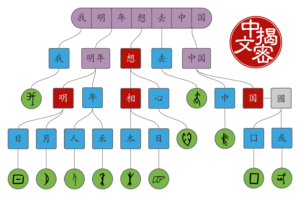 How to learn characters as a beginner